Cormorant-class Auxiliary Transport
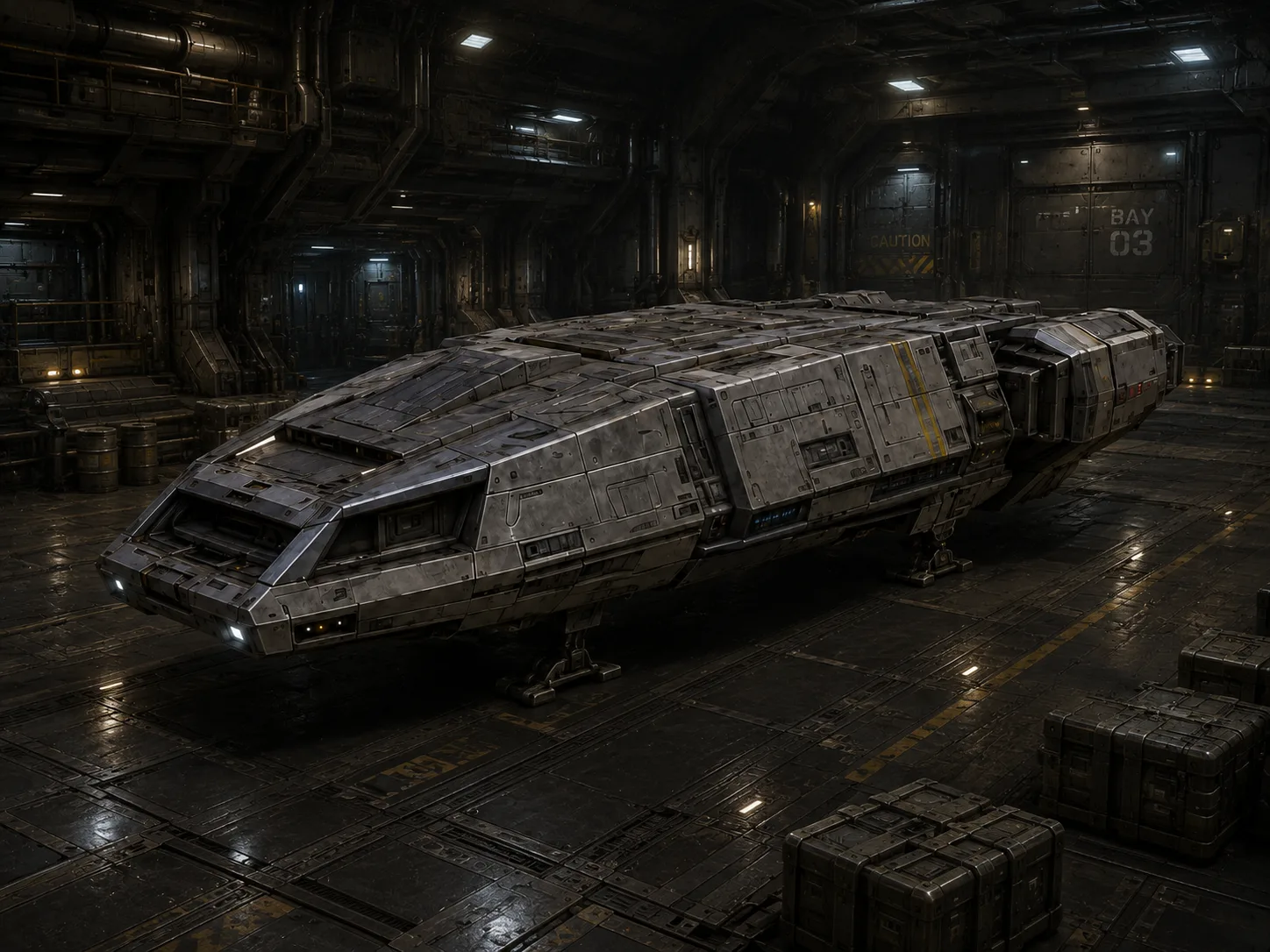
The Cormorant-class is a compact auxiliary transport built for the work a runabout cannot quite do and a starship cannot be risked on — covert insertion and extraction, reconnaissance, courier runs, survey support, and special-mission tasking. Its bay footprint is roughly that of a Danube-class runabout, so it berths anywhere the Rubicon already carries one.
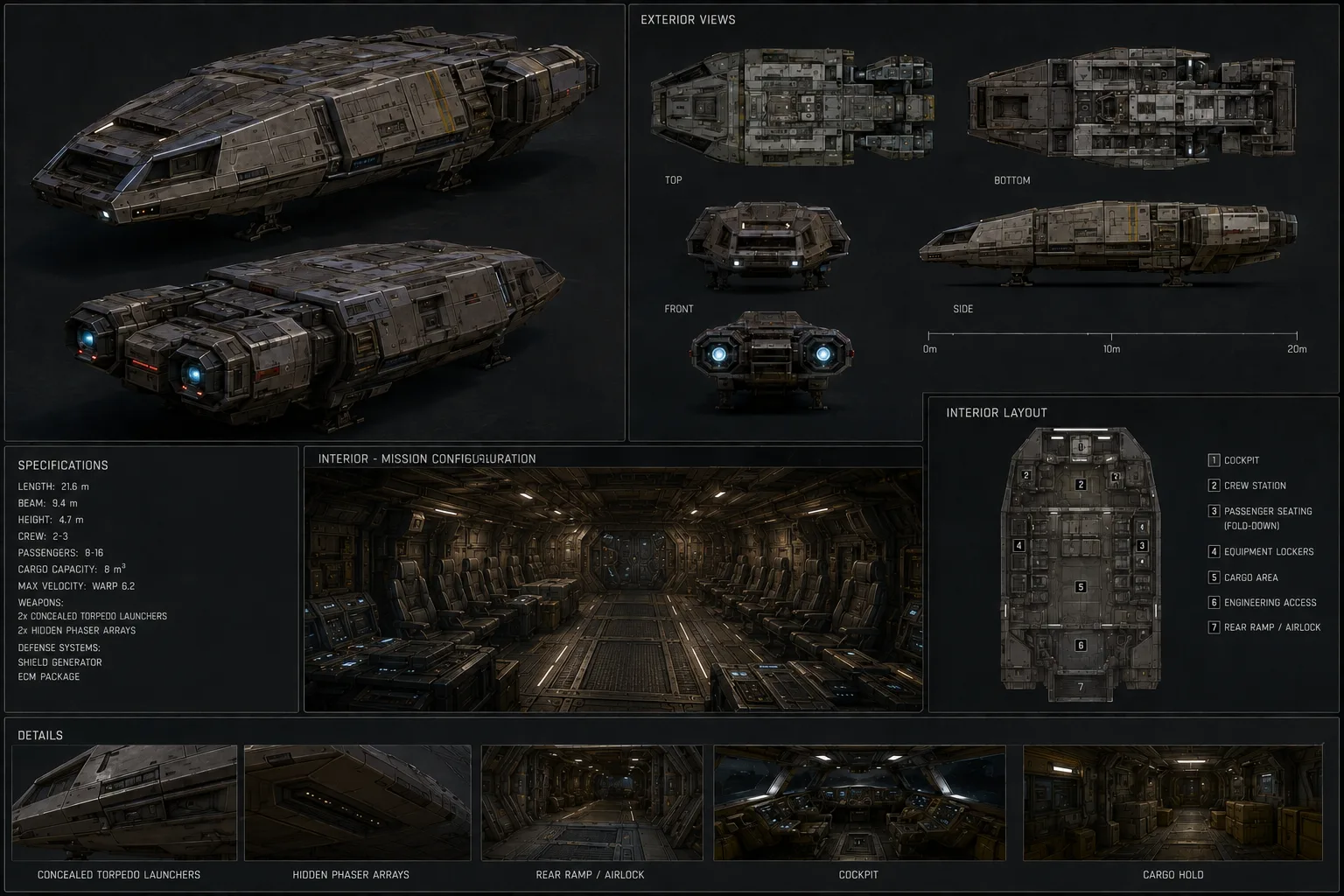
General Specifications
- Length: 21.6 m
- Beam: 9.4 m
- Height: 4.7 m
- Flight crew: 2–3
- Normal mission complement: 8–10
- Maximum short-duration capacity: 14–16
- Role: auxiliary transport, covert insertion and extraction, reconnaissance, courier, survey, and special-mission support
- Bay footprint: roughly Danube-class; fits anywhere the Excelsior refit can berth a runabout
- Cargo capacity: 8 m³
- Landing capable: yes
- Warp capable: yes
- Maximum warp: 6.2, a deliberate limit of the asymmetric warp drive
- Endurance: several days comfortably; roughly 1–2 weeks with a reduced complement
Performance
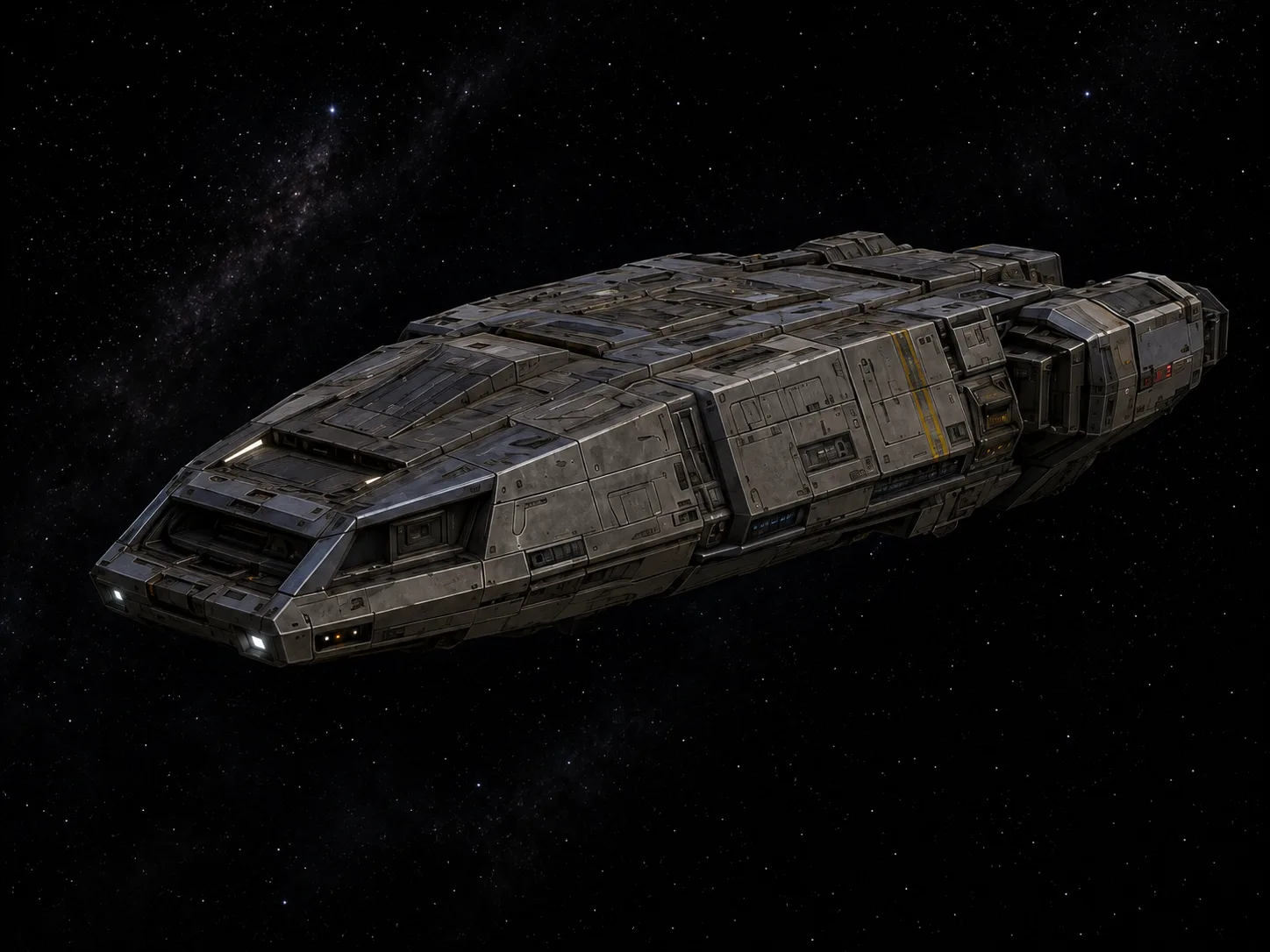
- High sublight acceleration.
- A stronger maneuvering-thruster package than a standard Danube.
- Reinforced structural-integrity field for aggressive turns.
- Good atmospheric handling for a craft its size.
- Compact warp system, tuned more for short-to-medium range than long independent cruises.
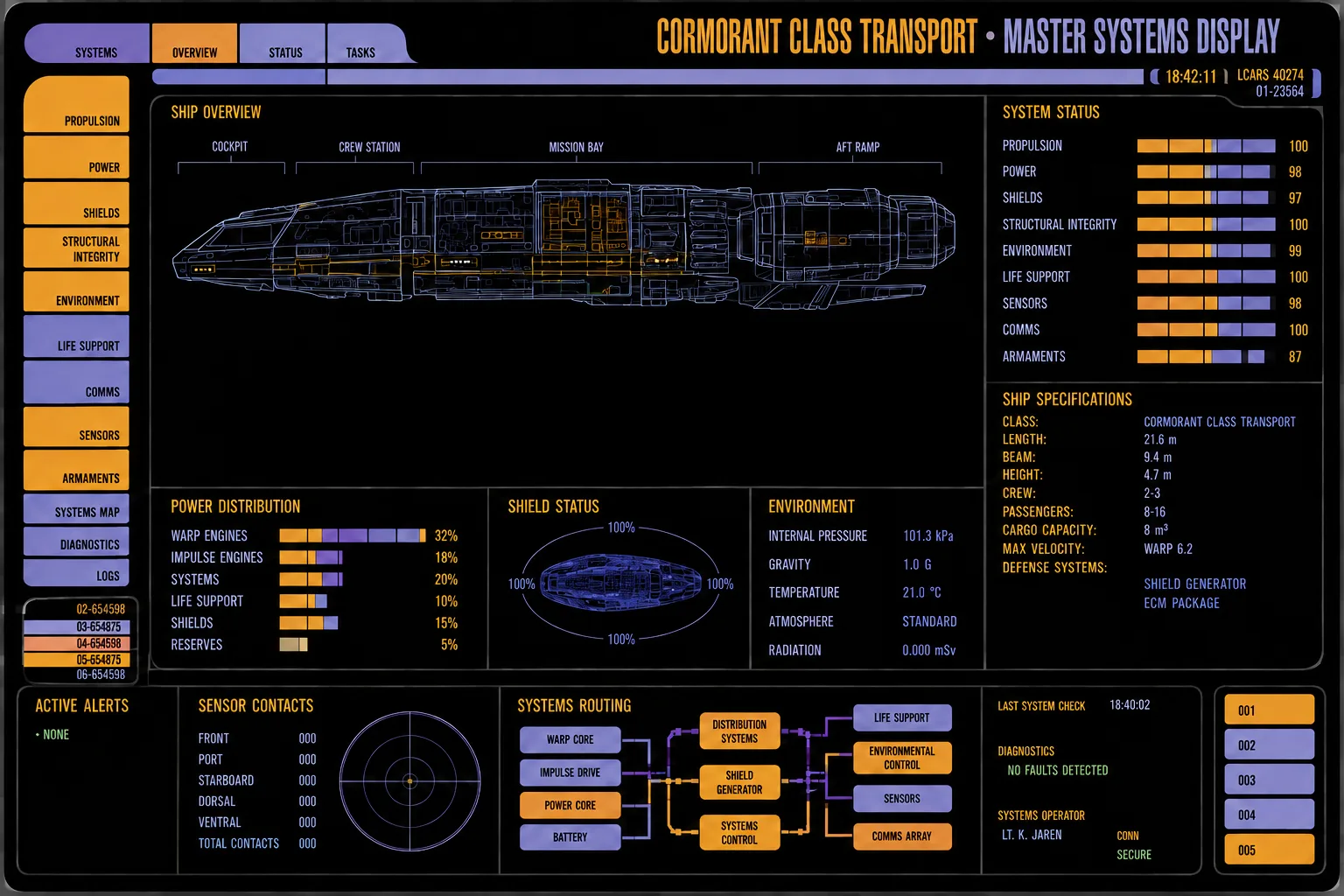
Asymmetric Warp Drive
The Cormorant carries its warp drive beneath the ship’s armour rather than in exposed nacelles. When the system is running, the warp field is held tight against the hull instead of being projected outward as a conventional bubble.
The cost is speed. Holding the field that close caps the craft at warp 6.2. What it buys is concealment: the field takes an irregular geometry, and the signature it leaves disperses far faster than a standard warp trail — too quickly to give a pursuing sensor much of a heading to follow.
It is the reason the Cormorant can make an approach and withdraw again without leaving a line that leads back to the Rubicon.
Armament
Weapons are kept visually hidden behind ordinary hull and service panels, so the craft reads as unarmed until it is not.
- 2 concealed forward micro-photon torpedo launchers.
- Limited torpedo magazine, roughly 8–12 rounds total.
- 2 concealed, low-profile phaser arrays.
- Optional aft defensive phaser coverage.
Defensive and Mission Systems
- Shields.
- Enhanced tactical and survey sensors.
- ECM and transponder-masking package.
- Configurable civilian identity and transponder profiles.
- Tractor emitter.
- Compact transporter, ideally 4–6 person.
- Secure equipment lockers.
- Modular aft cargo and mission area.
Interior
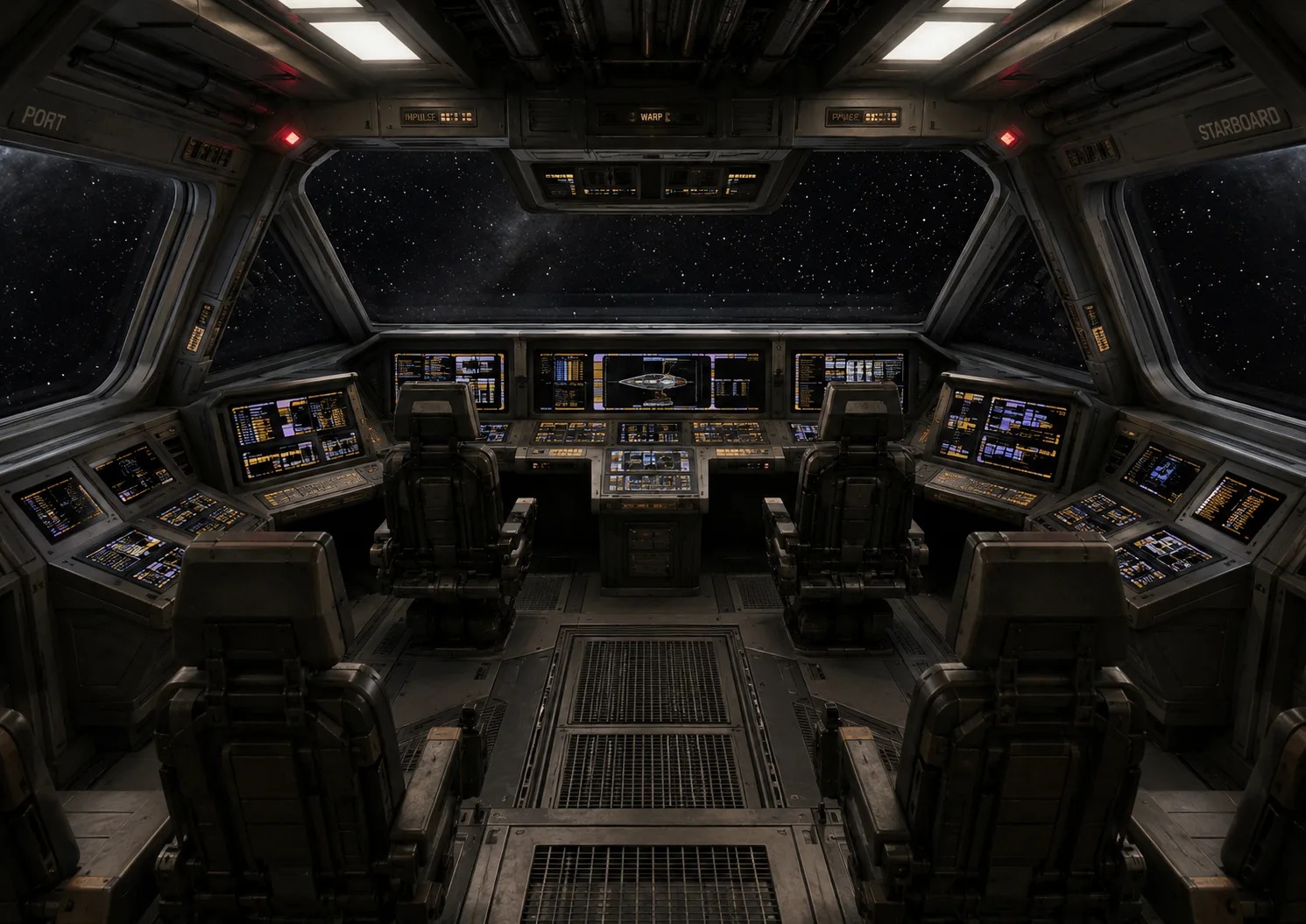
- Forward cockpit for 2–3.
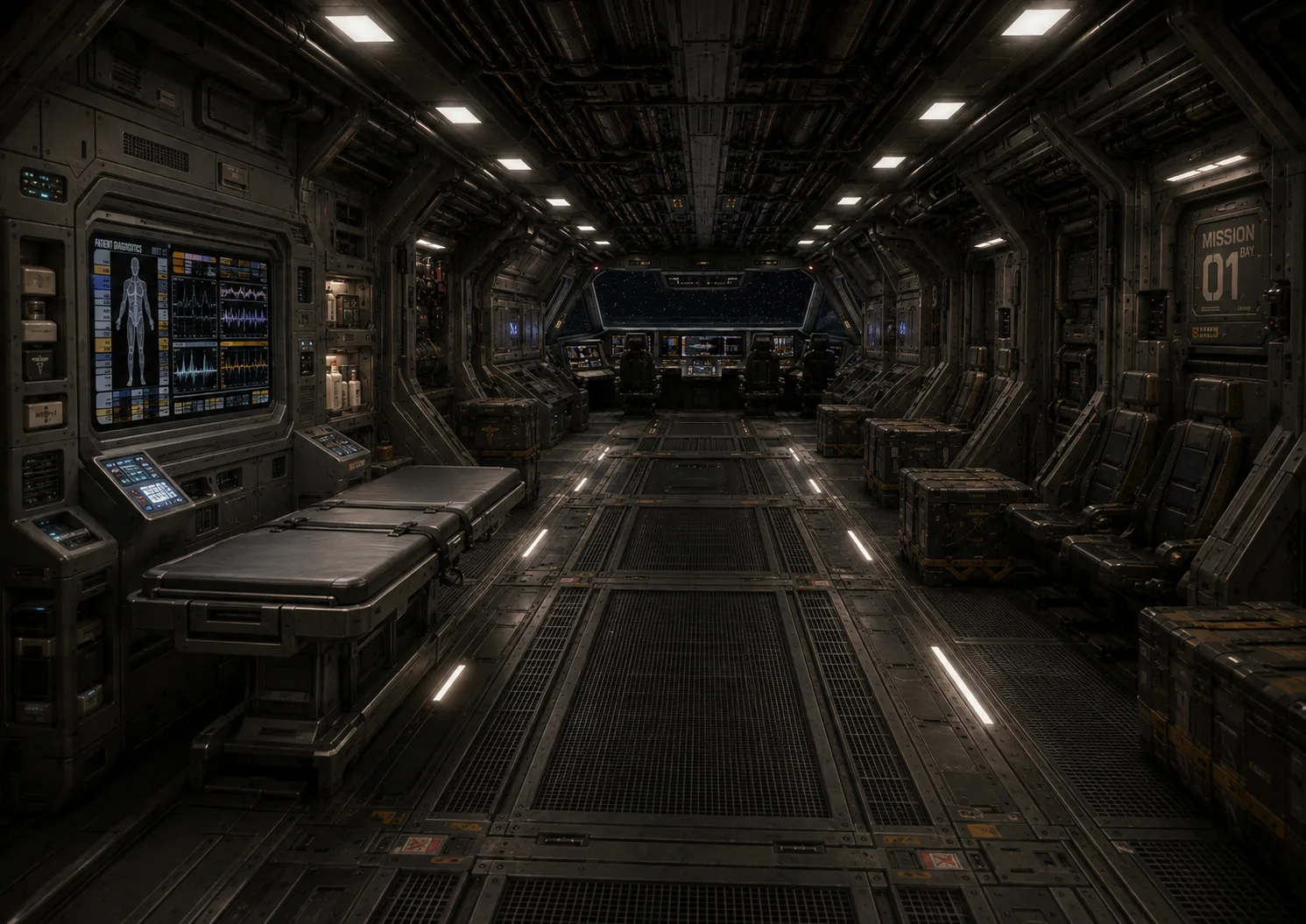
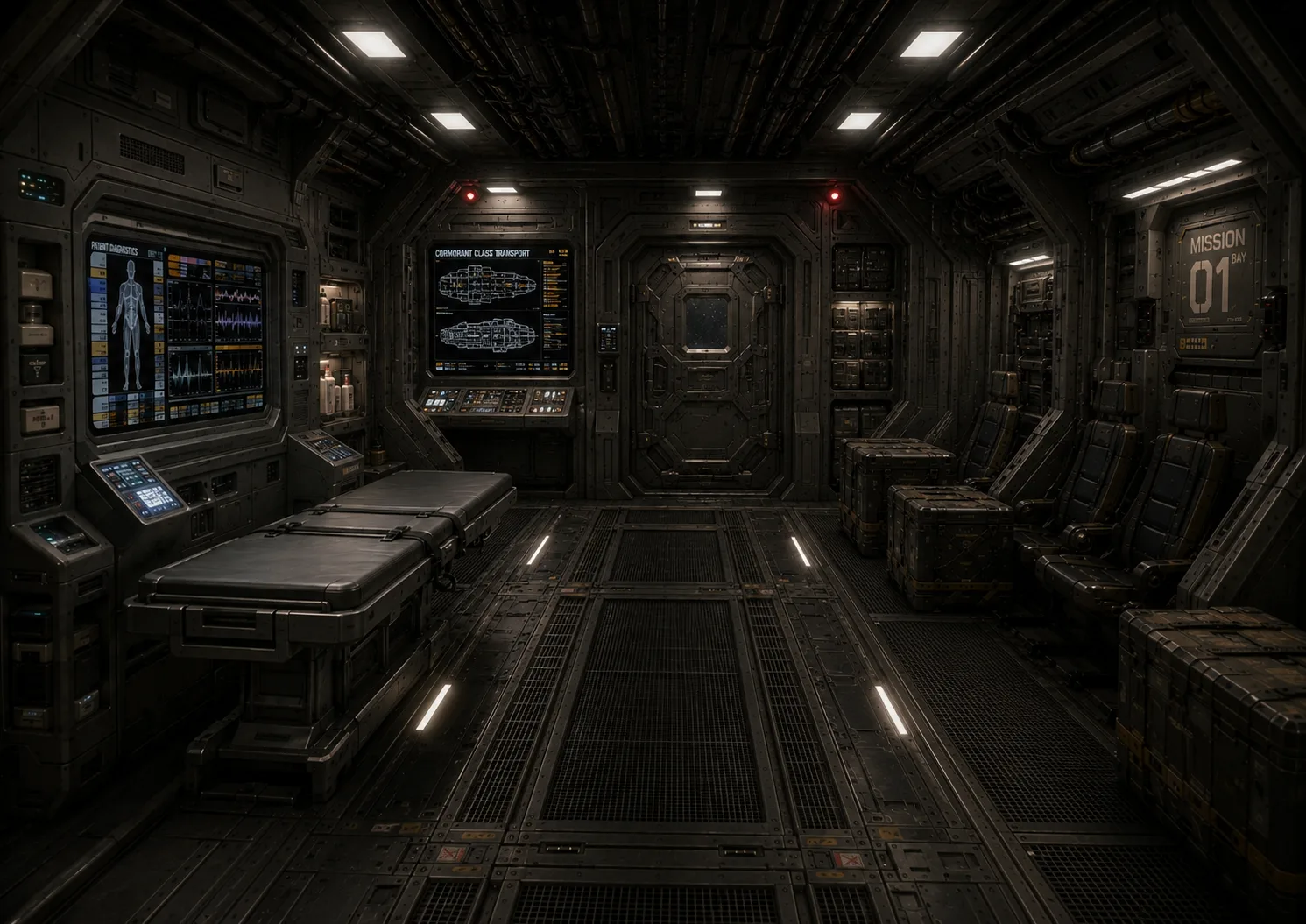
- Main mission cabin with fold-down seating.
- Seating for about 8–10 in normal configuration.
- Up to 16 in dense transport configuration.
- Central cargo and equipment space.
- Engineering access aft.
- Rear ramp and airlock.
- Minimal bunking or emergency sleeping capability rather than full cabins.
Last updated 2 weeks ago by